
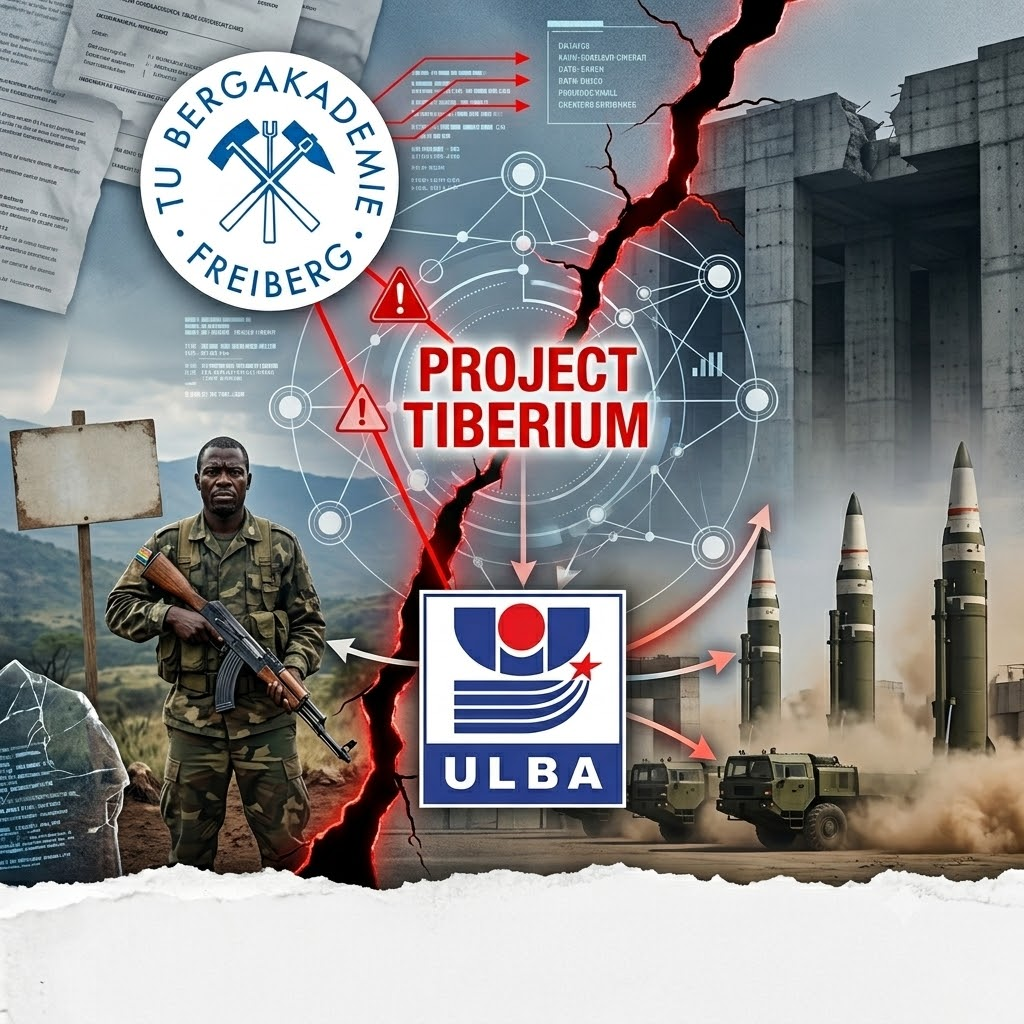
Since April 2026, some of Europe's most prestigious universities and research institutes have been indirectly connected to a conflict minerals network with links into Democratic Republic of the Congo (DRC) and a sanctioned Chinese nuclear conglomerate. The common link? A single partner in the Horizon Europe project TiBeRIUM called Ulba Metallurgical Plant.
Executive Summary
- The EU-funded TiBeRIUM project (Horizon Europe, €8M) includes Ulba Metallurgical Plant as partner.
- Ulba has documented ties to DRC conflict mineral networks linked to forced labor and child labor.
- Ulba jointly operates ULBA-FA with CGNPC, a Chinese nuclear conglomerate subject to U.S. sanctions.
- Ulba processes beryllium, a dual-use material controlled under U.S. and EU export regimes, raising the risk of nuclear technology proliferation.
TiBeRIUM Project Partner Linked to Sanctioned Actors
TiBeRIUM is an EU-funded initiative to secure titanium and beryllium, two minerals critical to European technology supply chains, through mining and processing partnerships in Kazakhstan and Uzbekistan. The EU has committed more than €8 million to the project, working alongside a number of respected European institutions, including the coordinating partner, Germany's Technische Universität (TU) Bergakademie Freiberg. As coordinator, the university, alongside the granting authority, has a responsibility to ensure that project members are properly vetted for reputational and security risks.
Our database shows that none of TU Bergakademie Freiberg's direct partnerships involve a sanctioned entity and includes cooperation with organizations such as the Helmholtz Institute [1,2], CAC Engineering GmbH [1,2], and WS Wärmeprozesstechnik GmbH [1]. This first level of analysis suggests minimal risks.
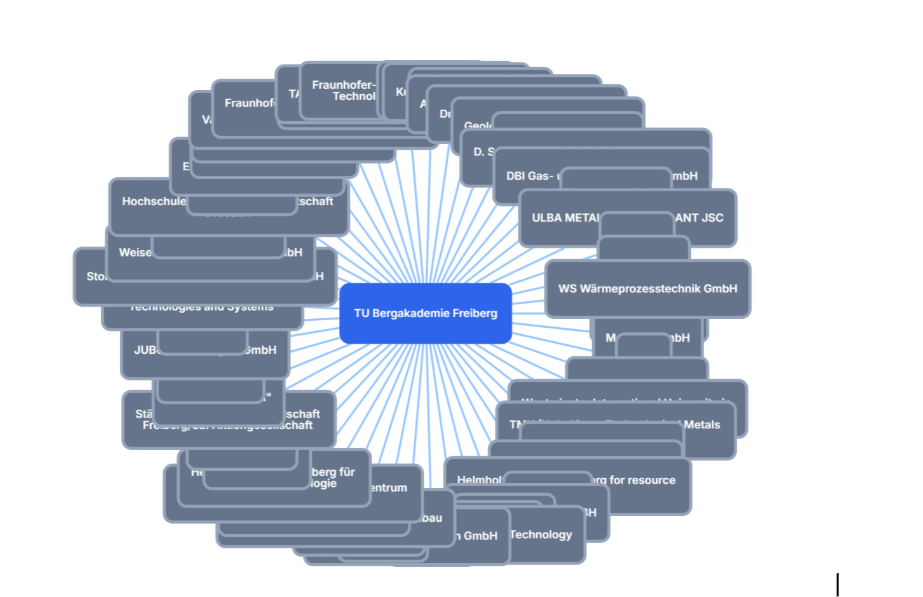
However, findings from the Lazlo Intelligence database have revealed that one of the key participants in the TiBeRIUM project is tied to a number of sanctioned actors across multiple continents: Ulba Metallurgical Plant [1,2]. If we look at their corporate network, we immediately spot multiple high-risk links.
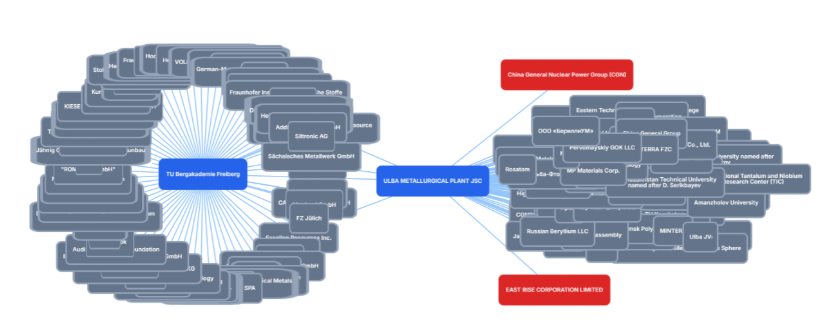
Conflict Minerals: Ulba's Links to DRC Warlords and Human Rights Abuses
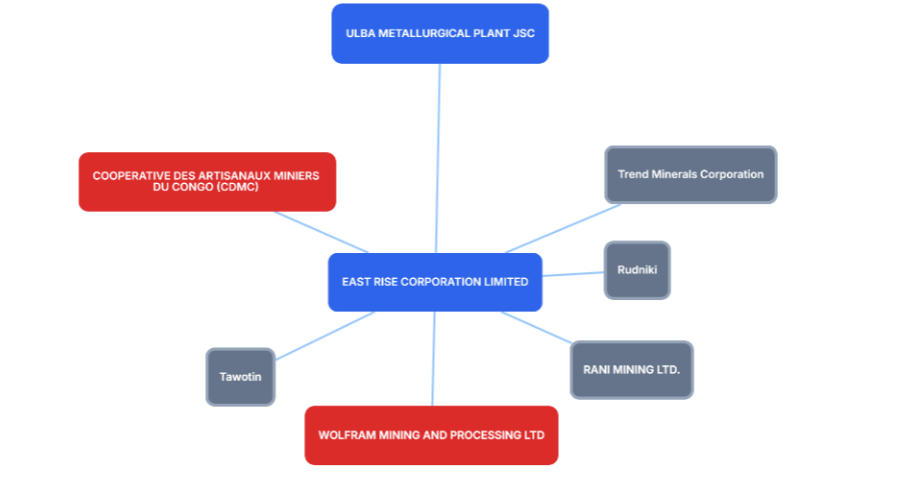
The Ulba Metallurgical Plant, based in eastern Kazakhstan and ultimately owned by the Kazakh state, has been identified [1] as part of a network moving minerals out of the DRC through Rwanda in a supply chain that the U.S. Treasury Department has tied [1] to "a wide range of human rights abuses, such as forced labor, child labor, and sexual and gender-based violence." As part of this network, Ulba admitted to receiving shipments from East Rise Corporation Limited, a Hong Kong-based trader, sanctioned by the U.S. in 2025. Ulba itself has also disclosed [1] 117 high-risk incidents in its supply chain during a single reporting period, but despite this, the company continued cooperation with the relevant suppliers. Among them are Wolfram Mining and Processing [1,2] and the Cooperative Des Artisanaux Miniers Du Congo [1,2,3,4,5], both linked to helping finance warlords in the DRC.
Ulba and CGNPC: Dual-Use Nuclear Technology and Sanctions Risk
Separately, Ulba maintains a joint venture, called ULBA-FA, with China General Nuclear Power Corporation (CGNPC), a Chinese nuclear conglomerate subject to U.S. restrictions. This joint venture, for example, provides nuclear fuel assemblies, the primary structural units of a nuclear reactor, to Fangchenggang Nuclear Power Plant and was authorized for AFA 3G fuel production by the French nuclear energy giant FRAMATOME [1,2,3]. While this nuclear fuel technology is not directly usable in nuclear weapons and highly-enriched uranium has been removed from the plant in 1994 [1], CGNPC-linked entities have been sanctioned [1] by the U.S. for efforts to acquire sensitive American nuclear technology and material for diversion to China's military.
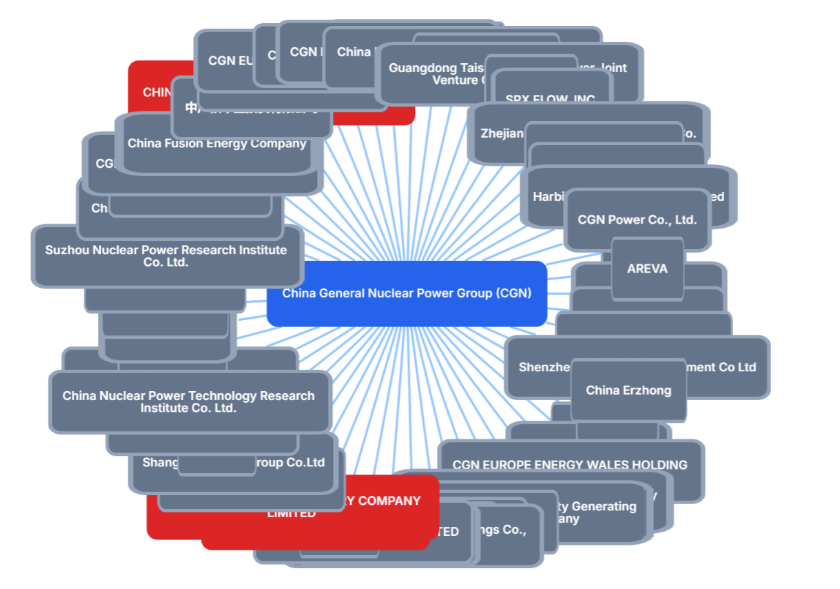
More concerning, Ulba's expertise is in beryllium processing , a controlled, dual-use material under both U.S. and EU export regimes [1,2,3]. Beryllium can be used as a neutron deflector, enhancing the efficiency of nuclear explosions. Because the EU project TiBeRIUM focuses on enhancing beryllium processing, any technical knowledge about this material that flows from the TiBeRIUM partnership toward restricted Chinese nuclear actors would negatively impact European and U.S. security.
Due Diligence Failures in EU-Funded Research
Despite these connections to human rights abuses and nuclear proliferation, Ulba itself has not been sanctioned. But that raises the question: did TiBeRIUM's organizers and EU partners fully understand who they were working with? This is especially noteworthy because just three years ago Apple was accused of profiting from war crimes through cooperation with the Kazakh plant [1]. TU Bergakademie Freiberg alone works with hundreds of other partners worldwide who are now also exposed to these networks.
In EU-funded projects involving dual-use materials, vetting partners is crucial to avoid unwanted reputational and security risks. TiBeRIUM's due diligence process has clearly fallen short, which is especially concerning given the EU Corporate Sustainability Due Diligence Directive (CSDDD 2024), demanding [1] exactly this from private companies.
What This Means for Companies with Kazakhstan Supply Chain Exposure
We identified more than a dozen companies in the US, Canada and Western Europe with links to Ulba. At Lazlo Intelligence, we recommend that all companies, research institutions, and NGOs go beyond sanctions lists to see where the real risks are hiding. Search any entity to see which companies it connects to before those connections become a problem.
For ongoing sanctions compliance tracking, see our monthly analysis of OFAC sanctions designations and daily updates in our blog, covering the latest trends and country breakdowns.